

Fresh produce, pharmaceuticals, frozen foods, and other temperature-sensitive goods all rely on one essential factor: a cold chain capable of maintaining precise conditions from origin to destination, often across thousands of miles and multiple modes of transport.
At the same time, sustainability has become a defining priority across the industry. Evolving environmental regulations, together with rising expectations to lower GHG emissions, minimize impacts on marine ecosystems, and improve overall environmental performance are reshaping the way goods move around the world.
For the refrigerated cargo sector, this challenge is even greater. Every shipment depends on a cold chain that must not only safeguard product quality but also operate responsibly and efficiently across the logistics journey.
As the industry works toward net-zero GHG emissions by 2050, ZIM is advancing a decarbonization strategy that supports long-term emissions reduction and alignment with emerging regulation.
Meeting these demands requires action across the entire supply chain. Operating one of the industry’s most modern fleets, ZIM continues to invest in cleaner technologies and innovative solutions that help lower environmental impact while delivering the reliability customers expect:
- Fleet Modernization: As part of its fleet renewal program, ZIM has invested in LNG-powered vessels, using LNG as a transition fuel that offers lower GHG emissions and air pollutants, compared to conventional marine fuels.

By the end of 2025, ~ 60% of ZIM’s operated capacity consisted of newbuild vessels, while around 40% was LNG-powered.
- Operational Efficiency: Reducing environmental impact is not only about the vessels themselves, but also about how they operate. ZIM continues to implement a wide range of operational and technical initiatives designed to improve efficiency and reduce fuel consumption, including:
- Optimized hull and vessel design that reduces resistance, lowers engine load, and improves energy efficiency
- AI-supported voyage planning, weather-aware routing, and port-call sequence optimization
- Speed management practices that help reduce fuel consumption and emissions
- Retrofitting existing vessels with low-friction coatings, propeller upgrades, and other efficiency-enhancing modifications
-
Cleaner Port Communities: Through its voluntary vessel speed-reduction efforts, recognized by the Green Flag Environmental Achievement Award, ZIM contributes to lower air pollutant emissions in and around port communities.
-
Sustainable Cold Chain: By deploying modern, energy-efficient vessels, expanding the use of cleaner fuels, and implementing operational measures across both new and existing vessels, ZIM continues to drive measurable improvements in environmental performance. In 2025, ZIM’s carbon intensity decreased by 13% compared to 2024, supported by an 11.5% improvement in fuel intensity.
- Modern Refrigerated Fleet: By investing in modern refrigerated units and advanced cooling systems, ZIM improves energy efficiency while maintaining the precise temperature control required for sensitive cargo. ZIM also operates one of the market’s youngest reefer fleets, with an average age of approximately five years.
Over the last decade, ZIM achieved ~70% reduction in average reefer power consumption, helping lower indirect energy demand across the cold chain.
- Cold-Chain Certified: In 2025, ZIM obtained the Temperature Mapping Certificate from Cambridge Refrigeration Technology (CRT), providing independent, third-party assurance that its reefer units maintain temperature uniformity and stability from origin to destination.
As we continue navigating our journey to net zero, meaningful sustainability efforts can happen across every stage of the supply chain, and they can start today.
ZIM’s EcoData Calculator helps estimate the full lifecycle emissions for dry and refrigerated shipments, including the inland transport leg of the journey.
Want to calculate the carbon footprint of your next shipment?
Try our free online EcoData Calculator

More to read...
-
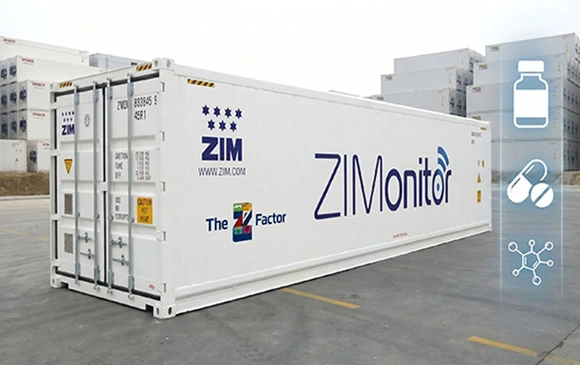
ZIM & Kuehne+Nagel: A Cold Chain Journey
Kuehne+Nagel turns to ZIMonitor for greater visibility and safer transportation of cargo worldwide. Fabio Megliani, Global Sea Logistics Reefer Healthcare Operations Manager highlights the value of ZIM’s 24/7 monitoring and support for refrigerated shipments.
-

What Makes Effective Cold Treatment Key to Protecting Peru’s Fresh Fruit Exports?
Moving fresh fruit across continents takes more than a reliable cold chain. Christhian Linares Nomesqui, ZIM Line Manager of ZCX Colibri Xpress in the Latin America Business Unit explores how the latest Cold Treatment upgrades are helping Peruvian exporters keep their fruit moving fresher, further.
-

What’s Next for Vietnam’s Perishable Exports?
Global demand is rising, export markets are expanding, and Vietnam is at the center of it all. Hoa Nguyen, ZIM Vietnam Country Sales Manager, examines the trends and cold chain developments driving the country’s rise in the global perishable industry.