

Vietnam has quickly emerged as one of Asia’s most compelling success stories in perishable exports. From tropical fruits appearing on supermarket shelves worldwide to seafood reaching premium international markets, the country has established itself as one of the region’s most dynamic export hubs and Asia’s fastest-growing markets for chilled and frozen cargo.
Since 2023, this growth has been fueled by stronger global food demand, broader market access, and an evolving cold chain industry that is adapting to stricter export standards.
Fruit Exports Remain a Key Growth Driver
Vietnam has become one of the region’s leading suppliers of tropical fruits, with demand rising across Asia, North America, and other global markets. As tropical fruits continue to gain popularity with consumers worldwide, exporters are increasingly turning to advanced cold chain solutions to help preserve quality throughout transit.
Like most agricultural export sectors, however, fruit exports are far from stable. Vietnam’s reefer demand is strongly shaped by seasonal production cycles, which create periods of intense activity throughout the year and place pressure on refrigerated storage capacity and careful cold-chain planning.
This is especially true for durians. Often referred to as Vietnam’s “golden fruit,” durian now accounts for approximately 50% of the country’s total fruit exports during its peak season between June to September. Other major export fruits include bananas, which are available year-round, with peak exports from January to February ahead of Lunar New Year, as well as mangoes, dragon fruit, jackfruit, coconut, longan, and lychee.
A Global Powerhouse in Seafood Exports
While fruit exports continue to attract growing attention, seafood remains one of Vietnam’s strongest export pillars.

Vietnam ranks among the world’s top three seafood exporters, with key products including shrimp, pangasius, tuna, squid, octopus, and bivalves.
Frozen seafood continues to account for the majority of export volumes, with chilled seafood exports also gaining momentum. Demand for products such as live lobster, crab, and fresh fish is rising across Asian markets, creating new opportunities for specialized reefer services.
Vietnam’s Growth Markets to Watch
China remains Vietnam’s largest export destination for fruit, vegetables, and seafood, with exports increasing by approximately 32% year-on-year in 2025.
The United States ranks as Vietnam’s second-largest export market, particularly for premium seafood and fruit. Japan, South Korea, and Europe also remain important destinations for Vietnam’s perishable exports.
However, as exports grow, so do regulatory expectations.
Vietnamese exporters serving European markets must navigate increasingly stringent sanitary requirements, including stricter quality control procedures, growing-area requirements, packaging standards, and comprehensive testing protocols.
Although these regulations are not new, they continue to evolve, requiring exporters to adapt their operations and quality assurance processes.
Connecting Vietnam to Global Markets
Vietnam’s export success relies on a logistics network built around several strategic gateways.
In the north, Haiphong serves as a major hub, particularly for cross-border exports to neighboring Asian markets, most notably China. In the south, Cat Lai and Cai Mep make up the primary gateways for long-haul shipments bound for the United States and Europe.

As a niche carrier focused on time-sensitive perishable cargo, ZIM offers the fastest direct transit times from Vietnam to global markets, at just 17 days from Haiphong to the US West Coast and 31-34 days to the US East Coast.
The Power of Visibility
While a significant share of Vietnam’s durian market still moves through shorter cross-border routes, premium shipments continue to rely on specialized refrigerated equipment that provides enhanced monitoring and control for long-haul shipments.
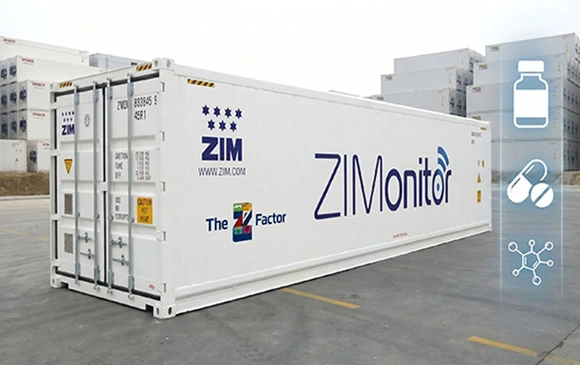
Solutions like ZIMonitor track cargo conditions throughout transit, helping exporters protect product quality and reduce risk. Backed by the ZIMonitor 24/7 global service team, exporters gain greater visibility into conditions inside the container, not just its location.
As Vietnam’s export industry enters an exciting new chapter, exporters are placing greater focus on premium markets and higher standards of cargo quality. In response, technologies that deliver enhanced visibility, control, and transparency are becoming not just an advantage, but a necessity.

More to read...
-
ZIM & Kuehne+Nagel: A Cold Chain Journey
Kuehne+Nagel turns to ZIMonitor for greater visibility and safer transportation of cargo worldwide. Fabio Megliani, Global Sea Logistics Reefer Healthcare Operations Manager highlights the value of ZIM’s 24/7 monitoring and support for refrigerated shipments.
-

The Z Way to Net-Zero
What does a more sustainable cold chain really look like? Shelly Levi-Tsur, Sustainability Department Manager, explores the actions ZIM is taking to minimize environmental impact across every step of the logistics cold chain.
-
What Makes Effective Cold Treatment Key to Protecting Peru’s Fresh Fruit Exports?
Moving fresh fruit across continents takes more than a reliable cold chain. Christhian Linares Nomesqui, ZIM Line Manager of ZCX Colibri Xpress in the Latin America Business Unit explores how the latest Cold Treatment upgrades are helping Peruvian exporters keep their fruit moving fresher, further.